

CSC2合格させる問題集でCSI24時間で試験合格できます
最新問題を使おうCSC2試験問題と解答でPDFで一年間無料更新
質問 # 47
For a market capitalization-weighted ETF focused on the S&P/TSX Composite Index, what is likely the greatest contributor to underperformance relative to the reference index?
- A. Rebalancing.
- B. Fees.
- C. Liquidity.
- D. Cash drag.
正解:D
質問 # 48
An analyst compiles the following information for Theta Inc.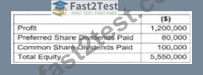
Based on the financial information provided, what will the dividend payout ratio be for Theta Inc.?
- A. 3.24%
- B. 6.66%
- C. 1.80%
- D. 8.33%
正解:D
質問 # 49
Which derivatives transaction has the greatest default risk?
- A. Exchange-traded equity option contract between an individual investor and a dealer.
- B. Interest rate forward agreement between an investment dealer and a corporation.
- C. Individual investor entering future contract with an institutional investor.
- D. Individual investor buying shares on an exchange during the ex-rights period.
正解:B
解説:
Aninterest rate forward agreement (FRA)is anover-the-counter (OTC)derivative contract. Unlike exchange- traded derivatives, OTC contracts are not centrally cleared, meaning there is nointermediary to guarantee performance. This increases counterparty (default) risk, making FRAs inherently riskier than exchange-traded contracts.
* A. Individual investor buying shares on an exchange during the ex-rights period: This is a standard transaction involving equity securities, not derivatives, and carries no default risk.
* C. Exchange-traded equity option contract between an individual investor and a dealer: Exchange- traded derivatives are backed by a clearinghouse, which mitigates default risk.
* D. Individual investor entering a futures contract with an institutional investor: Futures contracts are also exchange-traded and centrally cleared, reducing default risk.
質問 # 50
Where would the description d a company's fixed assets normally be found?
- A. In the statement of financial position.
- B. In the notes to the financial statements
- C. In the auditor report
- D. In the annual report
正解:B
解説:
The description of a company's fixed assets, including details about their nature, valuation methods, and depreciation, is typically found in thenotes to the financial statements. These notes provide additional context, explanations, and details about the figures presented in the financial statements. The statement of financial position will list fixed assets, but the comprehensive description is found in the notes.
References:
* Volume 1, Chapter 11:Corporations and Their Financial Statements, section on "Notes to the Financial Statements" describes how notes are used to provide critical details about items in the financial statements, including fixed assets.
質問 # 51
Which type of commodity ETF is most suitable for an investor seeking to gain exposure to the spot price of a commodity?
- A. Equity-based
- B. Swap-based
- C. Physical-based
- D. Futures-based.
正解:C
解説:
Commodity Exchange-Traded Funds (ETFs) provide investors with exposure to commodities such as gold, oil, and agricultural products. The most suitable type of commodity ETF for gaining exposure to the spot price of a commodity is thePhysical-based ETFbecause it involves direct ownership or storage of the commodity. For instance, gold ETFs backed by physical gold store bullion in vaults.
1. Physical-based ETFsThese ETFs hold the actual commodity in physical form, which ensures a close tracking of the spot price. Physical gold ETFs, for example, store gold bars and adjust the NAV (Net Asset Value) based on the current spot price. This eliminates discrepancies caused by futures contracts or swaps, making them ideal for tracking spot prices.
2. Swap-based ETFsThese rely on derivative agreements (swaps) to replicate the price movements of a commodity. While cost-effective, they do not hold the actual commodity, and their performance may slightly deviate from the spot price due to tracking errors or counterparty risks.
3. Futures-based ETFsThese use futures contracts to gain exposure. However, futures contracts come with complexities such as contango and backwardation, which can cause performance differences from the spot price over time.
4. Equity-based ETFsThese invest in shares of companies involved in the commodity sector (e.g., mining or energy companies). Their performance is influenced by company-specific factors and broader equity market trends, making them unsuitable for tracking spot prices.
References from CSC Study Documents:
* Exchange-Traded Funds, Chapter 19, Volume 2: Discusses the characteristics and structure of ETFs, includingcommodity-based ETFsand their classification.
* Risks related to tracking error and direct ownership of assets are highlighted under ETF types inSection
19.
質問 # 52
A fixed-rate bond was originally priced at $100 and paid $5 per year in interest. Currently, the bond is trading at $102.75. What is the impact on the current yield of coupon of the bond as a result of the change in price?
- A. The coupon is lower than 5%.
- B. The coupon is higher than 5%.
- C. The current yield is lower than 5%
- D. The current yield is higher man 5%.
正解:C
解説:
The coupon rate of the bond remains fixed at 5%, as it is based on the bond ' s original par value of $100. The current yield, however, decreases because the bond ' s price has increased to $102.75. Current yield is calculated as:
Current Yield=Coupon PaymentCurrent Price\text{Current Yield} = \frac{\text{Coupon Payment}}{\text
{Current Price}} Current Yield = Current PriceCoupon Payment
Given:
* Coupon Payment = $5
* Current Price = $102.75
Current Yield=5102.75#4.87%\text{Current Yield} = \frac{5}{102.75} \approx 4.87\% Current Yield =
102.755 # 4.87%
* A. The coupon is higher than 5%: The coupon remains fixed at 5%.
* B. The current yield is higher than 5%: The current yield is lower than 5% due to the increased price.
* D. The coupon is lower than 5%: The coupon does not change with the bond ' s price.
Reference: CSC Volume 1, Chapter 7, " Bond Pricing - Current Yield Calculation " explains the relationship between price changes and current yield.
質問 # 53
What actions can a government take to lower a $40 billion national deficit?
- A. Decrease taxation
- B. Increase government spending.
- C. Increase interest rates.
- D. Increase taxation
正解:D
質問 # 54
In which type of ETF does the portfolio manager select securities and their weighting to best match the performance of an index?
- A. Full replication
- B. Sampling
- C. Synthetic.
- D. Rules-based
正解:A
解説:
In ETFs, portfolio management involves selecting securities to match an index's performance. Full replication is a method where the portfolio manager buys all the securities in the index in their exact proportions.
* Full Replication:
* Involves holding every security in the index.
* Ensures minimal tracking error and high fidelity to the benchmark.
* Suitable for highly liquid and straightforward indexes like the S&P/TSX Composite.
* Sampling:
* Used for large, complex indexes where holding all securities is impractical.
* Selects a representative sample to approximate the index's performance.
* Rules-Based and Synthetic ETFs:
* Employ predefined rules or derivatives rather than physical securities.
Types of ETF Management ApproachesWhy D is CorrectOption D reflects the primary method of mirroring an index's performance through full replication, ensuring accuracy and minimal tracking error.
References:
* Volume 2, Section 19: Exchange-Traded Funds-Full Replication vs. Sampling.
* Volume 2, Section 13: Efficient Market Hypothesis-Implications for Passive Management.
質問 # 55
How do index-tracking ETFs differ from index mutual funds?
- A. ETFs have higher tracking errors
- B. Index mutual funds have higher implicit trading costs
- C. Index mutual funds only have initial investment and trading fees
- D. ETFs have higher administrative costs of record-keeping
正解:B
質問 # 56
If an advisor is interested in a top-down, active equity management approach that is more aggressive and likely to be successful, which type of fund manager should he choose?
- A. Sector rotation.
- B. Buy and hold.
- C. Market timing.
- D. Value oriented.
正解:A
解説:
Sector rotation is a top-down active equity strategy. The manager begins with macroeconomic and industry analysis, then shifts portfolio exposure toward sectors expected to outperform at a particular stage of the business cycle. This approach is more active and aggressive than buy-and-hold investing, but it is generally more practical than pure market timing because the manager remains invested while changing sector weights. Market timing attempts to move in and out of the market altogether, which is highly difficult and often unreliable. Value-oriented management is usually bottom-up because it focuses on individual undervalued securities. Buy and hold is passive or low-turnover. Therefore, sector rotation best matches a top-down active approach.
質問 # 57
What must be included in the relationship disclosure information provided to the mutual fund client?
- A. A description of the general impact on the client's return from management expense fees and other ongoing fees.
- B. A general explanation of how the investment performance of fund managers might be used against a benchmark.
- C. A description of any benefits received by the client related to the client's purchase or ownership of an investment through the dealer.
- D. A definition of the various terms of Know Your Product information collection and how the information will be used.
正解:A
解説:
Relationship disclosure information is intended to help clients understand the nature of their relationship with the dealer, including account services, costs, charges, compensation, conflicts, and how fees affect investment returns. For a mutual fund client, disclosure of the general impact of management expense fees and other ongoing fund costs is essential because these charges reduce the investor's return over time. Option A relates more to performance reporting or benchmarking discussion. Option B incorrectly focuses on internal Know Your Product collection terminology rather than client disclosure. Option D is incorrectly phrased because the relevant disclosure concerns charges, compensation, and benefits received by the dealer or related parties, not benefits received by the client. Therefore, Option C is correct.
質問 # 58
When acting as a principal, how do investment dealers generate revenue?
- A. Through brokerage changes.
- B. Through spreads on buy/sell prices.
- C. Thrown tracers.
- D. Through commissions
正解:B
解説:
When acting as aprincipal, investment dealers buy and sell securities for their own account. They generate revenue by earning aspread, which is the difference between the price at whichthey buy securities (bid price) and the price at which they sell them (ask price). This is distinct from their role as an agent, where revenue is earned through commissions on trades executed on behalf of clients.
* A. Through commissions: Commissions are earned when acting as an agent, not as a principal.
* B. Through tracers: This term does not apply to revenue generation.
* C. Through brokerage charges: Brokerage charges relate to fees imposed on client accounts, not principal trading spreads.
質問 # 59
The consumer price index was 125.9 in December of last year and 123.0 in December of the year before What was the inflation rate last year?
- A. 1.02%
- B. 2.36%
- C. 0.98%
- D. 2.30%
正解:B
解説:
The inflation rate is calculated using the formula:
Inflation Rate=CPIcurrent#CPIpreviousCPIprevious×100\text{Inflation Rate} = \frac{\text{CPI}_{\text
{current}} - \text{CPI}_{\text{previous}}}{\text{CPI}_{\text{previous}}} \times
100Inflation Rate=CPIpreviousCPIcurrent#CPIprevious×100
Substitute the given values:
Inflation Rate=125.9#123.0123.0×100=2.9123.0×100#2.36%\text{Inflation Rate} = \frac{125.9 - 123.0}
{123.0} \times 100 = \frac{2.9}{123.0} \times 100 \approx 2.36\%Inflation Rate=123.0125.9#123.
0×100=123.02.9×100#2.36%
* B. 2.30%: This is close but results from rounding errors or miscalculation.
* C. 0.98%andD. 1.02%: These values are far below the correct inflation rate calculated using the formula.
質問 # 60
A bond with a duration of five is currently priced at $103. If Interest rates rise by 2%. approximately what win be me bond ' s price?
- A. $92.70
- B. $97.85
- C. $113.30
- D. $108.15
正解:B
解説:
The approximate price change of a bond due to a change in interest rates can be estimated using the formula:
Price Change (%)=#Duration×#Interest Rate\text{Price Change (\%)} = - \text{Duration} \times \Delta \text
{Interest Rate} Price Change (%) = #Duration × #Interest Rate
Given:
* Duration = 5
* Current Price = $103
* Change in Interest Rate ( #\Delta # ) = 2% or 0.02
Price Change (%)=#5×0.02=#0.10 (#10%)\text{Price Change (\%)} = -5 \times 0.02 = -0.10 \, (-10\%) Price Change (%) = #5 × 0.02 = #0.10 ( #10% ) The new price is calculated as:
New Price=Current Price×(1+Price Change)=103×(1#0.10)=103×0.90=97.85\text{New Price} = \text
{Current Price} \times (1 + \text{Price Change}) = 103 \times (1 - 0.10) = 103 \times 0.90 = 97.85 New Price
= Current Price × ( 1 + Price Change ) = 103 × ( 1 # 0.10 ) = 103 × 0.90 = 97.85
* A. $108.15 and B. $113.30: These represent price increases, which are incorrect for rising interest rates.
* D. $92.70: This reflects a greater-than-actual price drop, which is inconsistent with the duration-based calculation.
Reference: CSC Volume 1, Chapter 7, " Duration as a Measure of Bond Price Volatility " explains how bond prices respond to interest rate changes.
質問 # 61
What is an example of a common feature of robo-advisor services?
- A. A telephone call with an advisor verifies that the computer-generated portfolio is suitable for the client.
- B. The service is exclusively provided to intermediaries such as advisors and employers
- C. Portfolios are built primarily with individual stocks and bonds.
- D. The portfolios are rarely rebalanced
正解:A
解説:
Many robo-advisors offer a hybrid model where an automated portfolio recommendation is supplemented by human oversight. A telephone call with an advisor ensures the portfolio generated by the algorithm aligns with the client's risk tolerance and investment objectives. This step helps meet regulatory suitability requirements.
* A. The service is exclusively provided to intermediaries such as advisors and employers: Robo-advisors are directly available to retail clients and are not exclusive to intermediaries.
* B. The portfolios are rarely rebalanced: Robo-advisors typically offer frequent or automatic rebalancing to maintain target asset allocations.
* C. Portfolios are built primarily with individual stocks and bonds: Robo-advisors predominantly use ETFs for diversification and cost-efficiency, not individual securities.
Reference:CSC Volume 1, Chapter 1, "Financial Technology - Robo-Advisors" highlights the hybrid models and regulatory compliance processes employed by robo-advisors
質問 # 62
What client's characteristics and investment priorities would lead an advisor to recognize that liquid alternatives are unsuitable for this client?
- A. Short-term time horizon.
- B. Short-term liquidity needs.
- C. Good understanding of portfolio theory.
- D. Focused on specific outcomes.
正解:A
解説:
Liquid alternatives may offer retail investors access to hedge-fund-like strategies such as short selling, leverage, derivatives, market-neutral approaches, or alternative sources of return. However, these strategies are more complex and are generally better suited to investors with a longer time horizon, appropriate risk tolerance, and a clear understanding of portfolio diversification. A short-term time horizon makes liquid alternatives unsuitable because strategy results may require a full market cycle to become effective, and short-term volatility can be difficult to manage. Being focused on specific outcomes may actually support the use of liquid alternatives. A good understanding of portfolio theory is also a positive suitability factor. Short-term liquidity needs matter, but the clearest unsuitability factor here is a short-term time horizon.
質問 # 63
What does a simplified prospectus typically allow a fund company to do?
- A. Provide up-to-date holding information to the public.
- B. To quality a real property funds for sale.
- C. Replace the financial reporting documents.
- D. Quality one or more mutual funds for sale.
正解:D
解説:
A simplified prospectus is a streamlined legal document that allows fund companies to qualify mutual funds for sale under National Instruments 81-101. It provides essential information about a fund's investment objectives, risks, fees, and performance in a concise and accessible format, enabling investors to make informed decisions. This document complements the more detailed financial disclosures and annual reports rather than replacing them.
Simplified prospectuses apply specifically to mutual funds and are not used for real property funds or to provide detailed holding updates.
* References:
* CSC Volume 2, Chapter 17: Mutual Funds - The Simplified Prospectus.
* CSC Volume 2, Chapter 23: Structured Products - Legal and Regulatory Frameworks.
質問 # 64
Which derivatives transaction has the greatest default risk?
- A. Exchange-traded equity option contract between an individual investor and a dealer.
- B. Interest rate forward agreement between an investment dealer and a corporation.
- C. Individual investor entering future contract with an institutional investor.
- D. Individual investor buying shares on an exchange during the ex-rights period.
正解:B
解説:
An interest rate forward agreement (FRA) is an over-the-counter (OTC) derivative contract. Unlike exchange- traded derivatives, OTC contracts are not centrally cleared, meaning there is no intermediary to guarantee performance. This increases counterparty (default) risk, making FRAs inherently riskier than exchange-traded contracts.
* A. Individual investor buying shares on an exchange during the ex-rights period: This is a standard transaction involving equity securities, not derivatives, and carries no default risk.
* C. Exchange-traded equity option contract between an individual investor and a dealer: Exchange- traded derivatives are backed by a clearinghouse, which mitigates default risk.
* D. Individual investor entering a futures contract with an institutional investor: Futures contracts are also exchange-traded and centrally cleared, reducing default risk.
Reference:CSC Volume 1, Chapter 10, "The Role of Derivatives - Counterparty Risks in OTC Contracts" explains the higher default risk associated with OTC derivatives like FRAs.
質問 # 65
Why are inverse exchange-traded funds effective in declining markets?
- A. They use derivatives.
- B. They use physical commodities.
- C. They use borrowed capital.
- D. They use active management.
正解:A
質問 # 66
Which form of private equity investing focuses on fixed-income securities of public companies that are in financial trouble?
- A. Leveraged buyout.
- B. Distressed debt.
- C. Late-stage venture capital.
- D. Growth capital.
正解:B
解説:
Distressed debt investing focuses on the debt securities of companies experiencing financial difficulty, restructuring, default risk, or bankruptcy pressure. Investors buy these securities at deep discounts because the issuer is troubled, then seek returns through recovery, restructuring, asset sales, or improved credit conditions. This is different from a leveraged buyout, where investors acquire control of a company using significant borrowed funds. Growth capital provides financing to expanding companies, usually without taking full control. Late-stage venture capital supports private companies that are closer to maturity or public listing. Since the question specifically refers to fixed-income securities of public companies in financial trouble, distressed debt is the correct private equity-related strategy.
質問 # 67
What is a characteristic of a growth industry?
- A. Company earnings-to-invested capital rates are above average.
- B. Price competition increases between companies.
- C. Industry growth matches the overall rate of economic growth.
- D. Demand for industry products is stable.
正解:A
解説:
A growth industry is expected to expand faster than the overall economy because of innovation, new demand, changing consumer behaviour, or technological development. Companies in these industries often generate above-average earnings relative to invested capital because demand is strong and expansion opportunities are significant. Option A describes a mature industry whose growth roughly tracks the broader economy. Option B may occur as competition develops, but price competition alone is not the best defining characteristic of a growth industry and may eventually pressure margins.
Option C describes a defensive or mature industry where demand remains steady regardless of economic conditions. The strongest growth-industry characteristic is that companies can earn above- average returns on invested capital due to superior growth prospects.
質問 # 68
What is the reason for an individual to use an estate freeze?
- A. Transfer control of the assets.
- B. Eliminate probate fees
- C. Limit the tax liability for future growth
- D. Reduces asset price volatility
正解:C
解説:
An estate freeze is a strategy used to minimize future tax liability by freezing the value of an individual's assets at their current level and transferring future growth to others (e.g., family members). This helps lock in the current value for taxation purposes while passing on potential growth to the next generation without incurring immediate taxes.
* Key Benefits of an Estate Freeze:
* Ensures that future appreciation in asset value is taxed in the hands of beneficiaries rather than the original owner, typically at lower tax rates.
* Facilitates succession planning by transferring control of assets to heirs.
* Limits tax exposure while maintaining flexibility in estate planning.
* Why Other Options Are Incorrect:
* A: An estate freeze does not eliminate probate fees, though it may reduce taxable estate value.
* B: Asset price volatility is unrelated to the purpose of an estate freeze.
* C: While asset control may change, this is not the primary reason for an estate freeze.
:
CSC Volume 2, Chapter 24: Estate Planning and Tax Strategies.
質問 # 69
A fixed-rate bond was originally priced at $100 and paid $5 per year in interest. Currently, the bond is trading at $102.75. What is the impact on the current yield of coupon of the bond as a result of the change in price?
- A. The coupon is lower than 5%.
- B. The coupon is higher than 5%.
- C. The current yield is lower than 5%
- D. The current yield is higher man 5%.
正解:C
解説:
The coupon rate of the bond remains fixed at 5%, as it is based on the bond's original par value of $100. The current yield, however, decreases because the bond's price has increased to $102.75. Current yield is calculated as:
Current Yield=Coupon PaymentCurrent Price\text{Current Yield} = \frac{\text{Coupon Payment}}{\text
{Current Price}}Current Yield=Current PriceCoupon Payment
Given:
* Coupon Payment = $5
* Current Price = $102.75
Current Yield=5102.75#4.87%\text{Current Yield} = \frac{5}{102.75} \approx 4.87\%Current Yield=102.
755#4.87%
* A. The coupon is higher than 5%: The coupon remains fixed at 5%.
* B. The current yield is higher than 5%: The current yield is lower than 5% due to the increased price.
* D. The coupon is lower than 5%: The coupon does not change with the bond's price.
Reference:CSC Volume 1, Chapter 7, "Bond Pricing - Current Yield Calculation" explains the relationship between price changes and current yield.
質問 # 70
What type of risk were mortgage-backed securities designed to address?
- A. Rollover
- B. Prepayment
- C. Liquidity
- D. Interest rate
正解:B
解説:
Mortgage-Backed Securities (MBS)are designed to addressprepayment risk, which arises when borrowers pay off their mortgages earlier than expected. Prepayments reduce the interest income investors receive and can affect the expected return on the security.
* Why Prepayment Risk is Addressed:
* Prepayment often occurs when interest rates decline, as borrowers refinance their mortgages. This leaves MBS investors reinvesting at lower yields, which impacts returns.
* Structuring MBS helps mitigate prepayment risk through mechanisms like tranches in Collateralized Mortgage Obligations (CMOs).
* Explanation of Options:
* A. Liquidity: Incorrect. MBS provides liquidity to lenders but is not designed to address liquidity risk directly.
* B. Interest Rate: Incorrect. MBS investors are still exposed to interest rate risk as rates impact prepayment behavior.
* C. Rollover: Incorrect. Rollover risk applies to short-term debt securities, not MBS.
* D. Prepayment: Correct. MBS structures are specifically designed to mitigate the impact of prepayments on investors.
References:
* CSC Volume 2, Chapter 23: Risks of structured products, particularly prepayment risks in MBS.
質問 # 71
What item compares the expected return of the market portfolio to the riskless rate?
- A. Variance
- B. Beta
- C. Alpha
- D. Risk premium
正解:D
質問 # 72
......
CSI CSC2 認定試験の出題範囲:
| トピック | 出題範囲 |
|---|---|
| トピック 1 |
|
| トピック 2 |
|
| トピック 3 |
|
| トピック 4 |
|
| トピック 5 |
|
最新問題をダウンロードCSC2問題集で2026年最新のCSC2試験問題集:https://jp.fast2test.com/CSC2-premium-file.html
最新のCSI CSC2認定練習テスト問題:https://drive.google.com/open?id=1EYlbNelCPvsE-8-0KWwGkgjRKlUZp8BO