

最新のCFPS合格保証付き試験問題集の認定サンプル問題
最新CFPSテスト材料には有効なCFPSテストエンジン
NFPA CFPS 認定試験の出題範囲:
| トピック | 出題範囲 |
|---|---|
| トピック 1 |
|
| トピック 2 |
|
| トピック 3 |
|
| トピック 4 |
|
質問 # 72
On the Homeland Security color-coded threat-level system, what color code represents the most severe risk?
- A. Yellow
- B. Orange
- C. Green
- D. Red
正解:D
質問 # 73
For either a grain dust fire or explosion to occur and be sustained, which of the following elements must be present?
- A. Fuel, ignition source, oxygen, and combustible dust
- B. Fuel, ignition source, and oxygen
- C. Dust, heat, and ignition source
- D. Fuel, oxygen, confinement, and ignition source
正解:A
解説:
A dust explosion is the rapid combustion of fine particles suspended in the air, often but not always in an enclosed location. Dust explosions can occur where any dispersed powdered combustible material is present in high enough concentrations in the atmosphere or other oxidizing gaseous medium such as oxygen.
Dust explosions are a frequent hazard in underground coal mines, in grain elevators, and other industrial environments. On the other hand, they are also commonly used by special effects artists, filmmakers, and pyro technicians, given their spectacular appearance and ability to be safely contained under certain carefully controlled conditions.
Conditions required
There are four necessary conditions for a dust explosion
* A combustible dust
* The dust is suspended in the air at a sufficiently high concentration
* There is an oxidant (typically atmospheric oxygen)
* There is an ignition source
In some traditional analyses of dust explosions, confinement is considered to be a fifth requirement; this is not an essential condition, but can greatly aggravate the physical damage that results.
How do combustible dust explosions happen?
Any fire needs three elements. These elements are known as the "fire triangle":
1. Fuel to burn
2. Oxygen
3. Ignition source (heat, spark, etc.)
A dust explosion needs two additional elements - known as the "dust pentagon":
4. Dispersion of dust particles in the right concentration, and
5. Confinement of the dust cloud.
Dispersion means the dust particles are suspended in air. Confinement means the dust is in an enclosed or limited space. This restriction allows pressure to build up, increasing the likelihood of an explosion.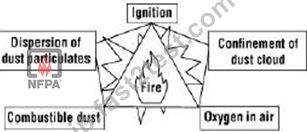
Figure shows the dust explosion pentagon. Figure from Occupational Safety and Health Administration (OSHA).
質問 # 74
A building provides sleeping facility, with no cooking facility for individual or occupants is what type of occupancy?
- A. Lodging and rooming
- B. Dormitory
- C. Apartment
- D. Hotel
正解:B
解説:
Hotel:
Any building or group of buildings that provide sleeping rooms for transients.
質問 # 75
Which of the following heat transfer values is relevant to fire protection because it defines the quantity of heat must be removed to cool a burning solid below its firepoint?
- A. British thermal unit
- B. Heat density
- C. Specific heat
- D. Latent heat
正解:B
解説:
(Review)
Heat transfer
An understanding of heat (or energy) transfer is the key to an understanding of fire behaviour and fire processes. The subject deserves careful study. There are many excellent texts to which one may turn (Welty, Wilson and Wicks 1976; DiNenno 1988), but for the present purposes it is necessary only to draw attention to the three mechanisms: conduction, convection and radiation.
The basic equations for steady-state heat transfer ( ) are:
Conduction:
Convection:
Radiation:
Conduction is relevant to heat transfer through solids; (k is a material property known as thermal conductivity (kW/mK ) and l is the distance (m) over which the temperature falls from T1 to T2 (in degrees Kelvin). Convection in this context refers to the transfer of heat from a fluid (in this case, air, flames or fire products) to a surface (solid or liquid); h is the convective heat transfer coefficient kW/m2K) and depends on the configuration of the surface and nature of the flow of fluid past that surface. Radiation is similar to visible light (but with a longer wavelength) and requires no intervening medium (it can traverse a vacuum); £` is the emissivity (efficiency by which a surface can radiate), £m is the Stefan-Boltzman constant (56.7 x 10⁻¹² kW/m2K4). Thermal radiation travels at the speed of light (3 x 10⁸ m/s) and an intervening solid object will cast a shadow.
質問 # 76
Which is a sign of exposure to cyanide gas?
- A. Collapsing suddenly
- B. Vomiting with great force
- C. Gasping for air
- D. Sweating profusely
正解:C
質問 # 77
The primary design approach to mitigate the effect of wind on smoke movement in high-rise buildings is based on
- A. fire department access.
- B. height of the building.
- C. tightness of the building.
- D. outside temperature.
正解:C
質問 # 78
While oxygen is the most common oxidizing agent, which of the following is also an oxidizing agent?
- A. Potassium chlorate
- B. Nitrogen
- C. Sodium chloride
- D. Ammonia
正解:C
質問 # 79
What type of fire pump has a pressure range that can exceed 300 psi (2,068 kPa)?
- A. Suction in-line
- B. Vertical turbine
- C. Horizontal-end suction
- D. Split case
正解:A
解説: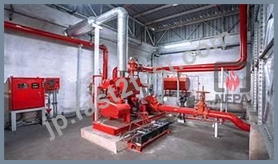
Explore
A suction in-line fire pump has a pressure range that can exceed 300 psi (2,068 kPa). This type of pump is a centrifugal pump that is installed in a vertical position with the suction and discharge connections in the same line. The pump is designed to handle high pressures and flows, and it is suitable for high-rise buildings and other applications that require high head. According to NFPA 20, Standard for the Installation of Stationary Pumps for Fire Protection, a suction in-line fire pump can have a rated pressure of up to 360 psi (2,482 kPa) 1. The other types of fire pumps mentioned in the question have lower pressure ranges, as shown in the table below 2:
Type of fire pump
Pressure range (psi)
Pressure range (kPa)
Horizontal-end suction
40 to 150
276 to 1,034
Split case
40 to 150
276 to 1,034
Vertical turbine
40 to 150
276 to 1,034
Suction in-line
40 to 360
276 to 2,482
質問 # 80
What is the maximum allowable sound pressure level (SPL) for a fire alarm system?
- A. 50 dBA
- B. 130 dBA
- C. 100 dBA
- D. 30 dBA
正解:C
解説:
According to NFPA 72, the maximum sound pressure level (SPL) for a fire alarm system is 110 dBA at the minimum hearing distance from the audible appliance 1. However, this limit can be exceeded if the sound pressure level measured 2 000 mm above floor level is not more than 100 dBA 2. Sound pressure level is a measure of the intensity of sound at a given point in space, expressed in decibels (dB). The higher the SPL, the louder the sound. For comparison, a normal conversation is about 60 dB, a jet engine is about 140 dB, and a gunshot is about 160 dB 3. Reference: Sound Pressure Levels - NFPA; NFPA fire alarm sound level - EntirelySafe.com; Subsection 907.5 - Occupant notification systems - Casetext; How Loud Is a Fire Alarm In Decibels (dB)? With Noise Comparison Chart; The Ontario Building Code | Audibility of Alarm Systems.
質問 # 81
When should the data of a pre-incident plan be evaluated?
- A. During an incident
- B. Before an incident
- C. After an incident
- D. During post incident critique
正解:C
解説:
Explanation
The data of a pre-incident plan should be evaluated after an incident, as part of the post incident critique or analysis. This is to assess the accuracy, completeness, and usefulness of the pre-incident plan, and to identify any changes or updates needed based on the lessons learned from the incident.Evaluating the pre-incident plan after an incident can also help improve the emergency response performance and the fire safety management of the site.References:123
質問 # 82
Which of the following is NOT an essential element of a residential fire protection plan?
- A. Minimization of fire hazards
- B. Installation of some alarms
- C. Installation of carbon monoxide alarms
- D. Development of escape plan
正解:A
質問 # 83
What percent of fire departments surveyed participate in the delivery of emergency medical services?
- A. 38%
- B. 61%
- C. 90%
- D. 79%
正解:D
解説:
Explanation
According to the web search results, 79% of fire departments surveyed participate in the delivery of emergency medical services (EMS).This is based on the NFPA report "US Fire Department Profile 2020"1, which states that nationwide, 37% of fire departments provided no EMS, 46% provided basic life support (BLS), and 17% provided advanced life support (ALS). Therefore, the percentage of fire departments that provided either BLS or ALS is 46% + 17% = 63%. However, this does not include fire departments that provided EMS through a third-party contract or agreement.According to the NFPA fireservice survey from
2018-20202, 16% of fire departments reported having such an arrangement. Therefore, the percentage of fire departments that participated in the delivery of EMS in some form is 63% + 16% = 79%.References:
NFPA report - U.S.fire department profile3
US Fire Department Profile 2020 Supporting Tables2
質問 # 84
What is the most common cause of structure fires due to hot work?
- A. Soldering equipment
- B. Welding torch
- C. Heat treating equipment
- D. Cutting torch
正解:B
質問 # 85
The minimum width of a doorway in a means of egress to accommodate a person in a wheelchair is
- A. 32 inches (813 mm).
- B. 40 inches (1016 mm).
- C. 28 inches (711 mm).
- D. 36 inches (914 mm).
正解:A
解説:
The minimum width of a doorway in a means of egress to accommodate a person in a wheelchair is 32 inches (813 mm). This is based on the requirements of the Americans with Disabilities Act (ADA) and the International Building Code (IBC), which both specify that doors in a path of egress and doors on an accessible route must have a clear opening width of at least 32 inches (813 mm) 12. This width allows enough space for a person in a wheelchair to maneuver through the doorway without difficulty. A wider doorway may be preferable for some types of wheelchairs or other assistive devices, but 32 inches (813 mm) is the minimum standard for accessibility and safety. Reference: DECODED: Calculating the Egress Width of Door Openings - I Dig Hardware; Digital Codes.
質問 # 86
Which NFPA Standard provides requirements for the storage and handling of aluminum powders, flakes, and pastes?
- A. 0
- B. 1
- C. 2
- D. 3
正解:B
解説:
NFPA 484: Standard for Combustible Metals, 2020 Edition, provides requirements for the storage and handling of aluminum powders, flakes, and pastes. This standard covers the production, processing, finishing, handling, recycling, storage, and use of all metals and alloys that are in a form capable of combustion or explosion. It also covers operations where metal or metal alloys are subjected to processing or finishing operations that produce combustible powder or dust. NFPA 484 includes specific chapters for various metals and alloys, including aluminum and aluminum alloys12 Reference:
NFPA 484: Standard for Combustible Metals
NFPA 651: Standard for the Machining and Finishing of Aluminum and the ...
質問 # 87
The NBS smoke chamber was developed specifically to measure.
- A. Density of smoke layer
- B. Color of smoke
- C. Temperature of smoke
- D. Obscuration by smoke particulates
正解:A
解説: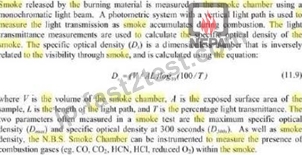
質問 # 88
What condition can occur when a pressure tank and a gravity tank are connected to a sprinkler system through a common riser?
- A. Vapor lock
- B. Gravity lock
- C. Air lock
- D. Pressure lock
正解:D
解説:
Air Lock A condition known as air lock can occur when a pressure tank and a gravity tank are connected to a sprinkler system through a common riser.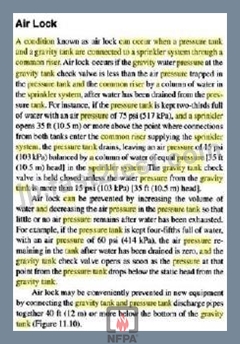
質問 # 89
Which type of construction consists of structural members of approved noncombustible or limited combustible materials with specified fire resistance ratings for exterior bearing walls of 3 or 4 hours?
- A. Type IV
- B. Type I
- C. Type II
- D. Type III
正解:B
解説:
Explanation
The correct answer is A. Type I construction consists of structural members of approved noncombustible or limited combustible materials with specified fire resistance ratings for exterior bearing walls of 3 or 4 hours.
This is the highest level of fire resistance among the five types of construction defined by NFPA 220: Standard for Types of Building Construction.Type I construction is typically used for high-rise buildings made of concrete and protected steel12
質問 # 90
......
CFPSサンプルには正確な更新された問題がこちら:https://jp.fast2test.com/CFPS-premium-file.html