

最新の[2024年07月16日]CISA試験問題集で有効で更新された問題集
無料お試しまもなく終了!100%有効なCISA試験問題集には1535問があります
認定された情報システム監査人(CISA)認定は、組織の情報技術とビジネスシステムを監査、制御、監視、評価する専門家のグローバルに認められた認定です。この認定は、情報システムガバナンス、セキュリティ、監査における知識、認定、および教育を提供する専門的な協会である情報システム監査および制御協会(ISACA)によって提供されます。 CISA認定は、それを保持している専門家が、組織の情報システムのセキュリティと管理を監査し、制御するために必要な知識とスキルを保持するように設計されています。
認定情報システム監査人(CISA)試験は、情報システム監査および制御協会(ISACA)が提供する認定試験です。 CISA認定は、組織の情報技術とビジネスシステムを監査、制御、監視、評価する専門家の標準として世界中で認識されています。この認定は、情報システムの監査、管理、セキュリティに関する個人の専門知識を示しています。
質問 # 595
An IS auditor concludes that logging and monitoring mechanisms within an organization are ineffective because critical servers are not included within the central log repository. Which of the following audit procedures would have MOST likely identified this exception?
- A. Comparing all servers included in the current central log repository with the listing used for the prior-year audit
- B. Inspecting a sample of alert settings configured in the central log repository
- C. Comparing a list of all servers from the directory server against a list of all servers present in the central log repository
- D. Inspecting a sample of alerts generated from the central log repository
正解:C
解説:
Explanation
The audit procedure that would have most likely identified the exception of critical servers not included in the central log repository is to compare a list of all servers from the directory server against a list of all servers present in the central log repository. This would allow the IS auditor to detect any discrepancies or omissions in the central log repository. The other audit procedures (A, C and D) would not be effective in identifying this exception, as they would only focus on the alerts generated, the alert settings configured, or the servers included in the previous year's audit, which may not reflect the current state of the central log repository.
References: IS Audit and Assurance Guideline 2202: Evidence Collection Techniques, CISA Review Manual (Digital Version), Chapter 5: Protection of Information Assets, Section 5.3: Logging and Monitoring
質問 # 596
An IS auditor finds that firewalls are outdated and not supported by vendors. Which of the following should be the auditor's NEXT course of action?
- A. Determine the value of the firewall.
- B. Report the mitigating controls.
- C. Report the security posture of the organization.
- D. Determine the risk of not replacing the firewall.
正解:D
質問 # 597
An IS auditor has been asked to advise on measures to improve IT governance within the organization. Which of the following is the BEST recommendation?
- A. Require executive management to draft IT strategy.
- B. Implement key performance indicators (KPIs).
- C. Implement annual third-party audits.
- D. Benchmark organizational performance against industry peers.
正解:B
質問 # 598
A firewall is being deployed at a new location. Which of the following is the MOST important factor in ensuring a successful deployment?
- A. Reviewing logs frequently
- B. Testing and validating the rules
- C. Training a local administrator at the new location
- D. Sharing firewall administrative duties
正解:B
解説:
A mistake in the rule set can render a firewall insecure. Therefore, testing and validating the rules is the most important factor in ensuring a successful deployment. A regular review of log files would not start until the deployment has been completed. Training a local administrator may not be necessary if the firewalls are managed from a central location. Having multiple administrators is a good idea, but not the most important.
質問 # 599
Minimum password length and password complexity verification are examples of:
- A. control objectives.
- B. control procedures.
- C. audit objectives.
- D. detection controls.
正解:B
解説:
Explanation/Reference:
Explanation:
Control procedures are practices established by management to achieve specific control objectives.
Password controls are preventive controls, not detective controls. Control objectives are declarations of expected results from implementing controls and audit objectives are the specific goals of an audit.
質問 # 600
Talking about application system audit, focus should always be placed on (Choose five.)
- A. None of the choices.
- B. performance and controls of the system
- C. input of data are processed correctly
- D. output of data are processed correctly
- E. the ability to limit unauthorized access and manipulation
- F. changes to the system are properly authorized
正解:B、C、D、E、F
解説:
Section: Protection of Information Assets
Explanation
Explanation:
Talking about application system audit, focus should be placed on the performance and controls of the
system, its ability to limit unauthorized access and manipulation, that input and output of data are
processed correctly on the system, that any changes to the system are authorized, and that users have
access to the system.
質問 # 601
An organization using development operations (DevOps) processes has deployed tools to provide automated configuration management functionality. Which of the following is the BEST way to ensure changes to system configuration do not inadvertently introduce security vulnerabilities into production platforms?
- A. Implement logging of developer activity in the production environment.
- B. Implement automated scanning as part of the release process.
- C. Implement mechanisms for measuring production application performance.
- D. Implement tools to inventory newly introduced application components.
正解:B
質問 # 602
Which of the following are examples of tools for launching Distributed DoS Attack (choose all that apply):
- A. Tripwire
- B. Trin00
- C. Stacheldracht
- D. TFN
- E. TFN2K
正解:B、C、D、E
解説:
Explanation/Reference:
Explanation:
Distributed DoS Attack is a network-based attack from many servers used remotely to send packets.
Examples of tools for conducting such attack include TFN, TFN2K, Trin00, Stacheldracht, and variants.
The best defense is to make sure all systems patches are up-to-date. Also make sure your firewalls are configured appropriately.
質問 # 603
Which of the following disaster recovery/continuity plan components provides the GREATEST assurance of
recovery after a disaster?
- A. Feedback is provided to management assuring them that the business continuity plans are indeed
workable and that the procedures are current. - B. The alternate facility will be available until the original information processing facility is restored.
- C. Copies of the plan are kept at the homes of key decision-making personnel.
- D. User management is involved in the identification of critical systems and their associated critical
recovery times.
正解:B
解説:
Section: Protection of Information Assets
Explanation:
The alternate facility should be made available until the original site is restored to provide the greatest
assurance of recovery after a disaster. Without this assurance, the plan will not be successful. All other
choices ensure prioritization or the execution pf the plan.
質問 # 604
An organization plans to implement a virtualization strategy enabling multiple operating systems on a single host. Which of the following should be the GREATEST concern with this strategy?
- A. Network bandwidth
- B. Licensing costs of the host
- C. Application performance
- D. Adequate storage space
正解:B
質問 # 605
Which of the following functionality is NOT performed by the application layer of a TCP/IP model?
- A. Print service, application services
- B. Data encryption and compression
- C. Dialog management
- D. End-to-end connection
正解:D
解説:
Section: Information System Operations, Maintenance and Support
Explanation/Reference:
The word NOT is the keyword used in the question. You need to find out a functionality which is not
performed by application layer of a TCP/IP model.
End-to-end connection is the Transport layer functionality in TCP/IP model.
For your exam you should know below information about TCP/IP model:
Network Models
Layer 4. Application Layer
Application layer is the top most layer of four layer TCP/IP model. Application layer is present on the top of
the Transport layer. Application layer defines TCP/IP application protocols and how host programs interface
with Transport layer services to use the network.
Application layer includes all the higher-level protocols like DNS (Domain Naming System), HTTP
(Hypertext Transfer Protocol), Telnet, SSH, FTP (File Transfer Protocol), TFTP (Trivial File Transfer
Protocol), SNMP (Simple Network Management Protocol), SMTP (Simple Mail Transfer Protocol) , DHCP
(Dynamic Host Configuration Protocol), X Windows, RDP (Remote Desktop Protocol) etc.
Layer 3. Transport Layer
Transport Layer is the third layer of the four layer TCP/IP model. The position of the Transport layer is
between Application layer and Internet layer. The purpose of Transport layer is to permit devices on the
source and destination hosts to carry on a conversation. Transport layer defines the level of service and
status of the connection used when transporting data.
The main protocols included at Transport layer are TCP (Transmission Control Protocol) and UDP (User
Datagram Protocol).
Layer 2. Internet Layer
Internet Layer is the second layer of the four layer TCP/IP model. The position of Internet layer is between
Network Access Layer and Transport layer. Internet layer pack data into data packets known as IP
datagram's, which contain source and destination address (logical address or IP address) information that
is used to forward the datagram's between hosts and across networks. The Internet layer is also
responsible for routing of IP datagram's.
Packet switching network depends upon a connectionless internetwork layer. This layer is known as
Internet layer. Its job is to allow hosts to insert packets into any network and have them to deliver
independently to the destination. At the destination side data packets may appear in a different order than
they were sent. It is the job of the higher layers to rearrange them in order to deliver them to proper network
applications operating at the Application layer.
The main protocols included at Internet layer are IP (Internet Protocol), ICMP (Internet Control Message
Protocol), ARP (Address Resolution Protocol), RARP (Reverse Address Resolution Protocol) and IGMP
(Internet Group Management Protocol).
Layer 1. Network Access Layer
Network Access Layer is the first layer of the four layer TCP/IP model. Network Access Layer defines
details of how data is physically sent through the network, including how bits are electrically or optically
signaled by hardware devices that interface directly with a network medium, such as coaxial cable, optical
fiber, or twisted pair copper wire.
The protocols included in Network Access Layer are Ethernet, Token Ring, FDDI, X.25, Frame Relay etc.
The most popular LAN architecture among those listed above is Ethernet. Ethernet uses an Access
Method called CSMA/CD (Carrier Sense Multiple Access/Collision Detection) to access the media, when
Ethernet operates in a shared media. An Access Method determines how a host will place data on the
medium.
IN CSMA/CD Access Method, every host has equal access to the medium and can place data on the wire
when the wire is free from network traffic. When a host wants to place data on the wire, it will check the
wire to find whether another host is already using the medium. If there is traffic already in the medium, the
host will wait and if there is no traffic, it will place the data in the medium. But, if two systems place data on
the medium at the same instance, they will collide with each other, destroying the data. If the data is
destroyed during transmission, the data will need to be retransmitted. After collision, each host will wait for
a small interval of time and again the data will be retransmitted.
Protocol Data Unit (PDU) :
Protocol Data Unit - PDU
The following answers are incorrect:
The other functionalities described in the options are performed by application layer in TCP/IP model.
The following reference(s) were/was used to create this question:
CISA review manual 2014 page number 272
質問 # 606
An existing system is being replaced with a new application package. User acceptance testing should
ensure that:
- A. the new system is better that the old system
- B. data from the old system has been converted correctly
- C. the new system functions as expected
- D. there is a business need for the new system
正解:C
解説:
Section: Information System Acquisition, Development and Implementation
質問 # 607
Which of the following would protect the confidentiality of information sent in email messages?
- A. Secure Hash Algorithm 1(SHA-1)
- B. Digital signatures
- C. Encryption
- D. Digital certificates
正解:C
解説:
Explanation
Encryption is the process of transforming information into an unreadable form using a secret key, so that only authorized parties can access it. Encryption would protect the confidentiality of information sent in email messages, as it would prevent unauthorized parties from intercepting and reading the messages. Secure Hash Algorithm 1 (SHA-1) is a cryptographic hash function that produces a fixed-length output from an input.
SHA-1 does not encrypt information, but rather verifies its integrity by detecting any changes or modifications. Digital signatures are electronic signatures that use encryption and hash functions to authenticate the identity of the sender and the integrity of the message. Digital signatures do not protect the confidentiality of information, but rather ensure its authenticity and non-repudiation. Digital certificates are electronic documents that contain the public key and identity information of an entity, such as a person, organization or device. Digital certificates are issued by trusted third parties called certificate authorities (CAs). Digital certificates do not protect the confidentiality of information, but rather enable secure communication and encryption by verifying the identity and public key of an entity. References:
1: [Encryption Definition]
2: [Secure Hash Algorithm 1 (SHA-1) Definition]
3: [Digital Signature Definition]
4: [Digital Certificate Definition]
質問 # 608
During an annual audit an IS auditor finds there is no written department and users The auditor's FIRST step should be to:
- A. document the issue in the final report
- B. recommend drafting a service level agreement (SLA)
- C. determine the Impact of the issue
- D. report the issue to senior management
正解:C
質問 # 609
An organization is disposing of removable onsite media which contains sensitive information.
Which of the following is the MOST effective method to prevent disclosure of sensitive data?
- A. Encrypting and destroying keys
- B. Machine shredding
- C. Software formatting
- D. Wiping and rewriting three times
正解:B
質問 # 610
Which of the following is the BEST point in time to conduct a post-implementation review?
- A. Immediately after deployment
- B. After the warranty period
- C. After a full processing cycle
- D. Prior to the annual performance review
正解:C
解説:
Explanation
The best point in time to conduct a post-implementation review is after a full processing cycle. A post-implementation review is a process to evaluate whether the objectives of the project were met, how effective the project was managed, what benefits were realized, and what lessons were learned. A post-implementation review should be conducted after a full processing cycle, which is the period of time required for a system or process to complete all its functions and produce its outputs. This allows for a more accurate and comprehensive assessment of the project's performance, outcomes, impacts, and issues.
The other options are not as good as option A. Conducting a post-implementation review immediately after deployment is too soon, because it does not allow enough time for the project's product or service to operate in the real world and generate measurable results. Conducting a post-implementation review after the warranty period is too late, because it may miss some important feedback or opportunities for improvement that could have been addressed earlier. Conducting a post-implementation review prior to the annual performance review is irrelevant, because it does not align with the project's life cycle or objectives.
References: What is Post-Implementation Review in Project Management?, What Is the Post-Implementation Review (PIR) Process?, Post-implementation review in project management?
質問 # 611
Which of the following layer of the OSI model provides a standard interface for applications to communicate with devices on a network?
- A. Transport layer
- B. Application layer
- C. Session layer
- D. Presentation layer
正解:B
解説:
Explanation/Reference:
The application layer serves as the window for users and application processes to access network services. This layer contains a variety of commonly needed functions:
Resource sharing and device redirection
Remote file access
Remote printer access
Inter-process communication
Network management
Directory services
Electronic messaging (such as mail)
Network virtual terminals
For your exam you should know below information about OSI model:
The Open Systems Interconnection model (OSI) is a conceptual model that characterizes and standardizes the internal functions of a communication system by partitioning it into abstraction layers. The model is a product of the Open Systems Interconnection project at the International Organization for Standardization (ISO), maintained by the identification ISO/IEC 7498-1.
The model groups communication functions into seven logical layers. A layer serves the layer above it and is served by the layer below it. For example, a layer that provides error-free communications across a network provides the path needed by applications above it, while it calls the next lower layer to send and receive packets that make up the contents of that path. Two instances at one layer are connected by a horizontal.
OSI Model
Image source: http://www.petri.co.il/images/osi_model.JPG
PHYSICAL LAYER
The physical layer, the lowest layer of the OSI model, is concerned with the transmission and reception of the unstructured raw bit stream over a physical medium. It describes the electrical/optical, mechanical, and functional interfaces to the physical medium, and carries the signals for all of the higher layers. It provides:
Data encoding: modifies the simple digital signal pattern (1s and 0s) used by the PC to better accommodate the characteristics of the physical medium, and to aid in bit and frame synchronization. It determines:
What signal state represents a binary 1
How the receiving station knows when a "bit-time" starts
How the receiving station delimits a frame
DATA LINK LAYER
The data link layer provides error-free transfer of data frames from one node to another over the physical layer, allowing layers above it to assume virtually error-free transmission over the link. To do this, the data link layer provides:
Link establishment and termination: establishes and terminates the logical link between two nodes.
Frame traffic control: tells the transmitting node to "back-off" when no frame buffers are available.
Frame sequencing: transmits/receives frames sequentially.
Frame acknowledgment: provides/expects frame acknowledgments. Detects and recovers from errors that occur in the physical layer by retransmitting non-acknowledged frames and handling duplicate frame receipt.
Frame delimiting: creates and recognizes frame boundaries.
Frame error checking: checks received frames for integrity.
Media access management: determines when the node "has the right" to use the physical medium.
NETWORK LAYER
The network layer controls the operation of the subnet, deciding which physical path the data should take based on network conditions, priority of service, and other factors. It provides:
Routing: routes frames among networks.
Subnet traffic control: routers (network layer intermediate systems) can instruct a sending station to
"throttle back" its frame transmission when the router's buffer fills up.
Frame fragmentation: if it determines that a downstream router's maximum transmission unit (MTU) size is less than the frame size, a router can fragment a frame for transmission and re-assembly at the destination station.
Logical-physical address mapping: translates logical addresses, or names, into physical addresses.
Subnet usage accounting: has accounting functions to keep track of frames forwarded by subnet intermediate systems, to produce billing information.
Communications Subnet
The network layer software must build headers so that the network layer software residing in the subnet intermediate systems can recognize them and use them to route data to the destination address.
This layer relieves the upper layers of the need to know anything about the data transmission and intermediate switching technologies used to connect systems. It establishes, maintains and terminates connections across the intervening communications facility (one or several intermediate systems in the communication subnet).
In the network layer and the layers below, peer protocols exist between a node and its immediate neighbor, but the neighbor may be a node through which data is routed, not the destination station. The source and destination stations may be separated by many intermediate systems.
TRANSPORT LAYER
The transport layer ensures that messages are delivered error-free, in sequence, and with no losses or duplications. It relieves the higher layer protocols from any concern with the transfer of data between them and their peers.
The size and complexity of a transport protocol depends on the type of service it can get from the network layer. For a reliable network layer with virtual circuit capability, a minimal transport layer is required. If the network layer is unreliable and/or only supports datagram's, the transport protocol should include extensive error detection and recovery.
The transport layer provides:
Message segmentation: accepts a message from the (session) layer above it, splits the message into smaller units (if not already small enough), and passes the smaller units down to the network layer. The transport layer at the destination station reassembles the message.
Message acknowledgment: provides reliable end-to-end message delivery with acknowledgments.
Message traffic control: tells the transmitting station to "back-off" when no message buffers are available.
Session multiplexing: multiplexes several message streams, or sessions onto one logical link and keeps track of which messages belong to which sessions (see session layer).
Typically, the transport layer can accept relatively large messages, but there are strict message size limits imposed by the network (or lower) layer. Consequently, the transport layer must break up the messages into smaller units, or frames, pretending a header to each frame.
The transport layer header information must then include control information, such as message start and message end flags, to enable the transport layer on the other end to recognize message boundaries. In addition, if the lower layers do not maintain sequence, the transport header must contain sequence information to enable the transport layer on the receiving end to get the pieces back together in the right order before handing the received message up to the layer above.
End-to-end layers
Unlike the lower "subnet" layers whose protocol is between immediately adjacent nodes, the transport layer and the layers above are true "source to destination" or end-to-end layers, and are not concerned with the details of the underlying communications facility. Transport layer software (and software above it) on the source station carries on a conversation with similar software on the destination station by using message headers and control messages.
SESSION LAYER
The session layer allows session establishment between processes running on different stations. It provides:
Session establishment, maintenance and termination: allows two application processes on different machines to establish, use and terminate a connection, called a session.
Session support: performs the functions that allow these processes to communicate over the network, performing security, name recognition, logging, and so on.
PRESENTATION LAYER
The presentation layer formats the data to be presented to the application layer. It can be viewed as the translator for the network. This layer may translate data from a format used by the application layer into a common format at the sending station, then translate the common format to a format known to the application layer at the receiving station.
The presentation layer provides:
Character code translation: for example, ASCII to EBCDIC.
Data conversion: bit order, CR-CR/LF, integer-floating point, and so on.
Data compression: reduces the number of bits that need to be transmitted on the network.
Data encryption: encrypt data for security purposes. For example, password encryption.
APPLICATION LAYER
The application layer serves as the window for users and application processes to access network services. This layer contains a variety of commonly needed functions:
Resource sharing and device redirection
Remote file access
Remote printer access
Inter-process communication
Network management
Directory services
Electronic messaging (such as mail)
Network virtual terminals
The following were incorrect answers:
Presentation layer - The presentation layer formats the data to be presented to the application layer. It can be viewed as the translator for the network. This layer may translate data from a format used by the application layer into a common format at the sending station, then translate the common format to a format known to the application layer at the receiving station.
Session layer - The session layer allows session establishment between processes running on different stations.
Transport layer - The transport layer ensures that messages are delivered error-free, in sequence, and with no losses or duplications. It relieves the higher layer protocols from any concern with the transfer of data between them and their peers.
The following reference(s) were/was used to create this question:
CISA review manual 2014 Page number 260
質問 # 612
To mitigate the risk of exposing data through application programming interface (API) queries. which of the following design considerations is MOST important?
- A. Data quality
- B. Data integrity
- C. Data retention
- D. Data minimization
正解:D
解説:
Explanation
The answer B is correct because data minimization is the most important design consideration to mitigate the risk of exposing data through application programming interface (API) queries. An API is a set of rules and protocols that allows different software components or systems to communicate and exchange data. API queries are requests sent by users or applications to an API to retrieve or manipulate data. For example, a user may query an API to get information about a product, a service, or a location.
Data minimization is the principle of collecting, processing, and storing only the minimum amount of data that are necessary for a specific purpose. Data minimization can help to reduce the risk of exposing data through API queries by limiting the amount and type of data that are available or accessible through the API. Data minimization can also help to protect the privacy and security of the data subjects and the data providers, as well as to comply with the relevant laws and regulations.
Some of the benefits of data minimization for API design are:
Privacy: Data minimization can enhance the privacy of the data subjects by ensuring that only the data that are relevant and essential for the API purpose are collected and processed. This can prevent unnecessary or excessive collection or disclosure of personal or sensitive data, such as names, addresses, phone numbers, email addresses, etc. Data minimization can also help to comply with the privacy laws and regulations that require data protection by design and by default, such as GDPR (General Data Protection Regulation) or CCPA (California Consumer Privacy Act).
Security: Data minimization can improve the security of the data providers by reducing the attack surface and the potential damage of a data breach. If less data are stored or transmitted through the API, there are fewer opportunities for attackers to access or compromise the data. Data minimization can also help to implement security controls such as encryption, access control, or logging more efficiently and effectively.
Performance: Data minimization can increase the performance of the API by optimizing the use of resources and bandwidth. If less data are stored or transmitted through the API, there are less storage space and network traffic required. Data minimization can also help to improve the speed and reliability of the API responses.
Some of the techniques for data minimization in API design are:
Define clear and specific purposes for the API and document them in the API specification or documentation.
Identify and classify the data that are needed for each purpose and assign them appropriate labels or levels, such as public, internal, confidential, or restricted.
Implement filters or parameters in the API queries that allow users or applications to specify or limit the data fields or attributes they want to retrieve or manipulate.
Use pagination or throttling in the API responses that limit the number or size of data items returned per request.
Use anonymization or pseudonymization techniques that remove or replace any identifying information from the data before sending them through the API.
Some examples of web resources that discuss data minimization in API design are:
Data Minimization in Web APIs - World Wide Web Consortium (W3C)
Adding Privacy by Design in Secure Application Development
Chung-ju/Data-Minimization: A repository of related papers. - GitHub
質問 # 613
An IS auditor has discovered that unauthorized customer management software was installed on a workstation.
The auditor determines the software has been uploading customer ita to an external party. Which of the following is the IS auditor's BEST course of action?
- A. Present the issue at the next audit progress meeting
- B. Review other workstations to determine the extent of the incident
- C. Determine the number of customer records that were uploaded
- D. Notify the incident response team.
正解:D
質問 # 614
Which of the following controls would provide the GREATEST assurance of database integrity?
- A. Query/table access time checks
- B. Audit log procedures
- C. Rollback and roll forward database features
- D. Table link/reference checks
正解:D
解説:
Explanation/Reference:
Explanation:
Performing table link/reference checks serves to detect table linking errors (such as completeness and accuracy of the contents of the database), and thus provides the greatest assurance of database integrity.
Audit log procedures enable recording of all events that have been identified and help in tracing the events. However, they only point to the event and do not ensure completeness or accuracy of the database's contents. Querying/monitoring table access time checks helps designers improve database performance, but not integrity. Rollback and roll forward database features ensure recovery from an abnormal disruption. They assure the integrity of the transaction that was being processed at the time of disruption, but do not provide assurance on the integrity of the contents of the database.
質問 # 615
When auditing the alignment of IT to the business strategy, it is MOST important (or the IS auditor to:
- A. ensure an IT steering committee is appointed to monitor new IT projects.
- B. compare the organization's strategic plan against industry best practice.
- C. evaluate deliverables of new IT initiatives against planned business services.
- D. interview senior managers for their opinion of the IT function.
正解:C
質問 # 616
Which of the following database model allow many-to-many relationships in a tree-like structure that allows multiple parents?
- A. Network database model
- B. Hierarchical database model
- C. Object-relational database model
- D. Relational database model
正解:A
解説:
Explanation/Reference:
Network database model-The network model expands upon the hierarchical structure, allowing many-to- many relationships in a tree-like structure that allows multiple parents.
For your exam you should know below information about database models:
A database model is a type of data model that determines the logical structure of a database and fundamentally determines in which manner data can be stored, organized, and manipulated. The most popular example of a database model is the relational model, which uses a table-based format.
Common logical data models for databases include:
Hierarchical database model
Network model
Relational model
Object-relational database models
Hierarchical database model
In a hierarchical model, data is organized into a tree-like structure, implying a single parent for each record. A sort field keeps sibling records in a particular order. Hierarchical structures were widely used in the early mainframe database management systems, such as the Information Management System (IMS) by IBM, and now describe the structure of XML documents. This structure allows one one-to-many relationship between two types of data. This structure is very efficient to describe many relationships in the real world; recipes, table of contents, ordering of paragraphs/verses, any nested and sorted information.
This hierarchy is used as the physical order of records in storage. Record access is done by navigating through the data structure using pointers combined with sequential accessing. Because of this, the hierarchical structure is inefficient for certain database operations when a full path (as opposed to upward link and sort field) is not also included for each record. Such limitations have been compensated for in later IMS versions by additional logical hierarchies imposed on the base physical hierarchy.
Hierarchical database model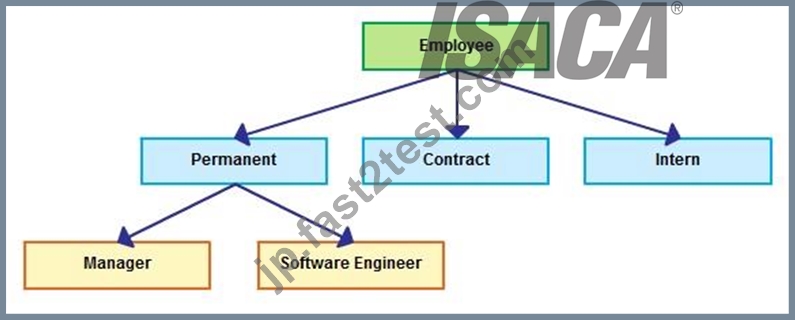
Image source: http://creately.com/blog/wp-content/uploads/2012/06/hierarchical-database-model.png Network database model
The network model expands upon the hierarchical structure, allowing many-to-many relationships in a tree-like structure that allows multiple parents. It was the most popular before being replaced by the relational model, and is defined by the CODASYL specification.
The network model organizes data using two fundamental concepts, called records and sets. Records contain fields (which may be organized hierarchically, as in the programming language COBOL). Sets (not to be confused with mathematical sets) define one-to-many[disambiguation needed] relationships between records: one owner, many members. A record may be an owner in any number of sets, and a member in any number of sets.
A set consists of circular linked lists where one record type, the set owner or parent, appears once in each circle, and a second record type, the subordinate or child, may appear multiple times in each circle. In this way a hierarchy may be established between any two record types, e.g., type A is the owner of B.
At the same time another set may be defined where B is the owner of A Thus all the sets comprise a general directed graph (ownership defines a direction), or network construct. Access to records is either sequential (usually in each record type) or by navigation in the circular linked lists.
The network model is able to represent redundancy in data more efficiently than in the hierarchical model, and there can be more than one path from an ancestor node to a descendant. The operations of the network model are navigational in style: a program maintains a current position, and navigates from one record to another by following the relationships in which the record participates. Records can also be located by supplying key values.
Network Database model
Source of Image:http://creately.com/blog/wp-content/uploads/2012/06/database-design-network- model.png
Relational database model
In the relational model of a database, all data is represented in terms of tulles, grouped into relations. A database organized in terms of the relational model is a relational database.
In the relational model, related records are linked together with a "key".
The purpose of the relational model is to provide a declarative method for specifying data and queries:
users directly state what information the database contains and what information they want from it, and let the database management system software take care of describing data structures for storing the data and retrieval procedures for answering queries.
Most relational databases use the SQL data definition and query language; these systems implement what can be regarded as an engineering approximation to the relational model. A table in an SQL database schema corresponds to a predicate variable; the contents of a table to a relation; key constraints, other constraints, and SQL queries correspond to predicates. However, SQL databases, including DB2, deviate from the relational model in many details, and Cod fiercely argued against deviations that compromise the original principles.
Relational database model
Image Source: http://www.datastax.com/docs/_images/relational_model.png Object-relational database Model
An object-relational database (ORD), or object-relational database management system (ORDBMS), is a database management system (DBMS) similar to a relational database, but with an object-oriented database model: objects, classes and inheritance are directly supported in database schemas and in the query language. In addition, just as with pure relational systems, it supports extension of the data model with custom data-types and methods.
Example of an object-oriented database model
An object-relational database can be said to provide a middle ground between relational databases and object-oriented databases (OODBMS). In object-relational databases, the approach is essentially that of relational databases: the data resides in the database and is manipulated collectively with queries in a query language; at the other extreme are OODBMSes in which the database is essentially a persistent object store for software written in an object-oriented programming language, with a programming API for storing and retrieving objects, and little or no specific support for querying.
The following were incorrect answers:
Hierarchical database model - In a hierarchical model, data is organized into a tree-like structure, implying a single parent for each record. A sort field keeps sibling records in a particular order.
Relational model- In the relational model of a database, all data is represented in terms of tulles, grouped into relations. A database organized in terms of the relational model is a relational database. In the relational model, related records are linked together with a "key".
Object-relational database models- An object-relational database can be said to provide a middle ground between relational databases and object-oriented databases (OODBMS). In object-relational databases, the approach is essentially that of relational databases: the data resides in the database and is manipulated collectively with queries in a query language; at the other extreme are OODBMSes in which the database is essentially a persistent object store for software written in an object-oriented programming language, with a programming API for storing and retrieving objects, and little or no specific support for querying.
The following reference(s) were/was used to create this question:
CISA review manual 2014 Page number 254
質問 # 617
To ensure the integrity of a recovered database, which of the following would be MOST useful?
- A. Database defragmentation tools
- B. Before-and-after transaction images
- C. Application transaction logs
- D. A copy of the data dictionary
正解:B
解説:
Section: Protection of Information Assets
質問 # 618
When planning an application audit, it is MOST important to evaluate risk factors by interviewing:
- A. process owners
- B. IT management
- C. application owners
- D. application users
正解:A
質問 # 619
Identify the LAN topology from below diagram presented below:
bus topology
- A. Mesh
- B. Star
- C. Ring
- D. Bus
正解:D
解説:
Explanation/Reference:
For your exam you should know the information below related to LAN topologies:
LAN Topologies
Network topology is the physical arrangement of the various elements (links, nodes, etc.) of a computer network.
Essentially, it is the topological structure of a network, and may be depicted physically or logically. Physical topology refers to the placement of the network's various components, including device location and cable installation, while logical topology shows how data flows within a network, regardless of its physical design.
Distances between nodes, physical interconnections, transmission rates, and/or signal types may differ between two networks, yet their topologies may be identical.
Bus
In local area networks where bus topology is used, each node is connected to a single cable. Each computer or server is connected to the single bus cable. A signal from the source travels in both directions to all machines connected on the bus cable until it finds the intended recipient. If the machine address does not match the intended address for the data, the machine ignores the data. Alternatively, if the data matches the machine address, the data is accepted. Since the bus topology consists of only one wire, it is rather inexpensive to implement when compared to other topologies. However, the low cost of implementing the technology is offset by the high cost of managing the network. Additionally, since only one cable is utilized, it can be the single point of failure. If the network cable is terminated on both ends and when without termination data transfer stop and when cable breaks, the entire network will be down.
Bus topology
Graphic from: http://www.technologyuk.net/telecommunications/networks/images/bus_topology.gif Linear bus
The type of network topology in which all of the nodes of the network are connected to a common transmission medium which has exactly two endpoints (this is the 'bus', which is also commonly referred to as the backbone, or trunk) - all data that is transmitted between nodes in the network is transmitted over this common transmission medium and is able to be received by all nodes in the network simultaneously.
Distributed bus
The type of network topology in which all of the nodes of the network are connected to a common transmission medium which has more than two endpoints that are created by adding branches to the main section of the transmission medium - the physical distributed bus topology functions in exactly the same fashion as the physical linear bus topology (i.e., all nodes share a common transmission medium).
Star
In local area networks with a star topology, each network host is connected to a central point with a point- to-point connection. In Star topology every node (computer workstation or any other peripheral) is connected to central node called hub or switch.
The switch is the server and the peripherals are the clients. The network does not necessarily have to resemble a star to be classified as a star network, but all of the nodes on the network must be connected to one central device.
All traffic that traverses the network passes through the central point. The central point acts as a signal repeater.
The star topology is considered the easiest topology to design and implement. An advantage of the star topology is the simplicity of adding additional nodes. The primary disadvantage of the star topology is that the central point represents a single point of failure.
Star Topology
Image from: http://fcit.usf.edu/network/chap5/pics/star.gif
Ring
A network topology that is set up in a circular fashion in which data travels around the ring in one direction and each device on the ring acts as a repeater to keep the signal strong as it travels. Each device incorporates a receiver for the incoming signal and a transmitter to send the data on to the next device in the ring.
The network is dependent on the ability of the signal to travel around the ring. When a device sends data, it must travel through each device on the ring until it reaches its destination. Every node is a critical link. If one node goes down the whole link would be affected.
Ring Topology
Image from: https://forrester-infosystems.wikispaces.com/
Mesh
The value of a fully meshed networks is proportional to the exponent of the number of subscribers, assuming that communicating groups of any two endpoints, up to and including all the endpoints, is approximated by Reed's Law.
A mesh network provides for high availability and redundancy. However, the cost of such network could be very expensive if dozens of devices are in the mesh.
Mesh Topology
Image from: http://www.technologyuk.net/telecommunications/networks/images/mesh_topology.gif Fully connected mesh topology
A fully connected network is a communication network in which each of the nodes is connected to each other. In graph theory it known as a complete graph. A fully connected network doesn't need to use switching nor broadcasting. However, its major disadvantage is that the number of connections grows quadratic ally with the number of nodes, so it is extremely impractical for large networks. A two-node network is technically a fully connected network.
Partially connected mesh topology
The type of network topology in which some of the nodes of the network are connected to more than one other node in the network with a point-to-point link - this makes it possible to take advantage of some of the redundancy that is provided by a physical fully connected mesh topology without the expense and complexity required for a connection between every node in the network.
The following answers are incorrect:
The other options presented are not valid.
The following reference(s) were/was used to create this question:
CISA review manual 2014, Page number 262
質問 # 620
......
CISA認定は、情報システム監査、コントロール、セキュリティの専門家にとって貴重な資格です。これは、リスク管理、ガバナンス、ITコンプライアンスを含む監査プロセスに関する包括的な理解を示しています。CISA認定試験は、5つのドメインにおける候補者の知識とスキルをテストする、挑戦的な4時間のコンピュータベースの試験です。認定を受けるためには、情報システム監査、コントロール、またはセキュリティの分野で5年以上の職業経験が必要であり、ISACAの職業倫理規定に従う必要があります。
CISA試験問題集で100%高得点させるCISA試験解答がこちら:https://jp.fast2test.com/CISA-premium-file.html
検証済みのCISA試験問題成功確定させます:https://drive.google.com/open?id=178uO-c4CX-MOna76WLD_-mdfFIuirHPa